Gasoline Engine: Ignition, Fuel System and Air-Fuel Mixture
Your car cranks fine but won't catch. Or it starts, then stumbles and shakes at idle. Or the check engine light came on and the scan tool says something about a lean condition. Whatever brought you here, you're probably wondering the same thing: is this an ignition problem, a fuel problem, or an ai…
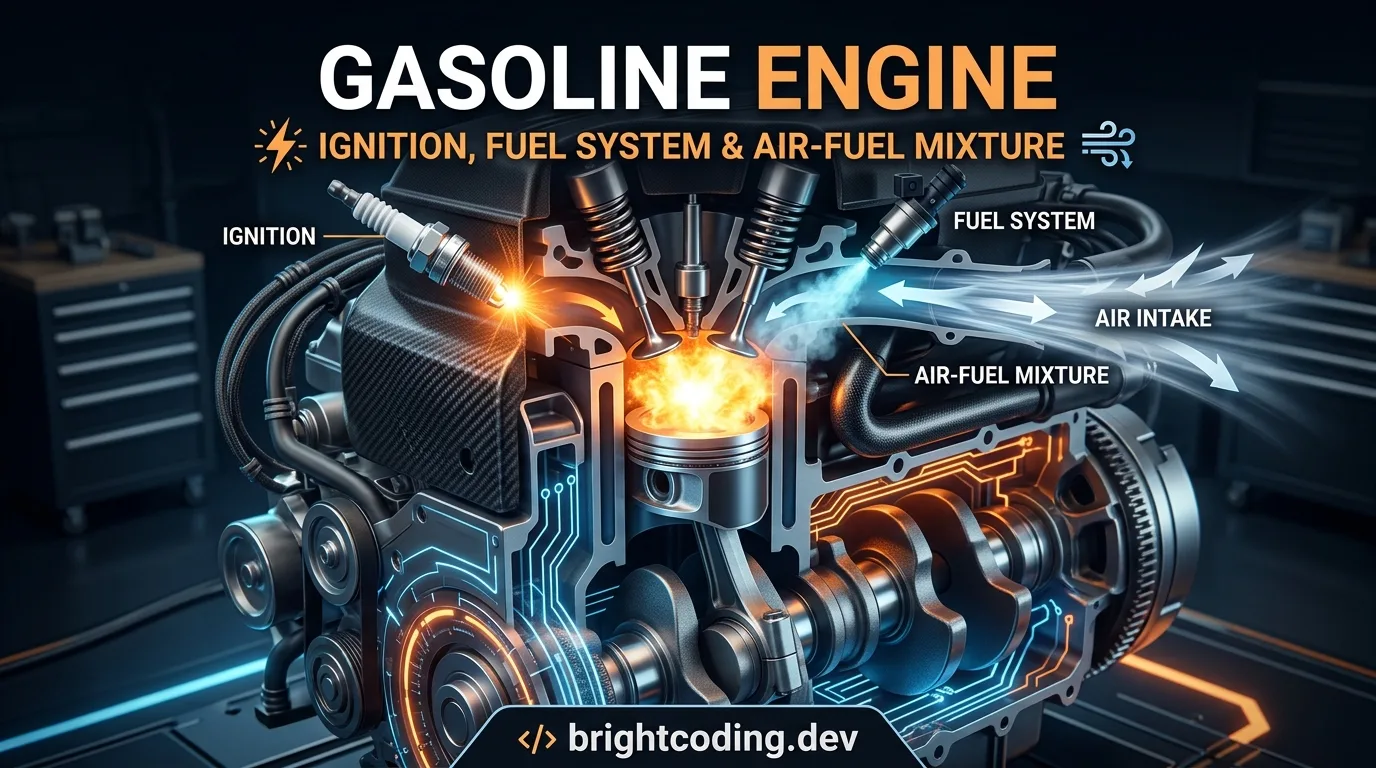
Your car cranks fine but won't catch. Or it starts, then stumbles and shakes at idle. Or the check engine light came on and the scan tool says something about a lean condition. Whatever brought you here, you're probably wondering the same thing: is this an ignition problem, a fuel problem, or an air-fuel mixture problem?
Here's the honest answer. Those three systems are so tightly linked that a fault in one usually shows up as a symptom in another. A weak spark can look like a fuel problem. A vacuum leak can look like an ignition problem. That's exactly why guessing gets expensive. This guide walks through how ignition, fuel delivery and air-fuel mixture actually work together, what goes wrong, and how to narrow it down without throwing parts at the car.
Why your engine feels like it's misbehaving
A gasoline engine needs three things in the right proportions: spark at the right moment, fuel at the right pressure, and air mixed with that fuel at roughly the right ratio. Get any one of those wrong and you feel it immediately, rough idle, hesitation, misfires, poor fuel economy, or a no-start.
What makes this frustrating for owners is that the symptoms overlap so much. A misfire code doesn't tell you whether the spark plug, the coil, the injector or a vacuum leak is to blame. It just tells you combustion didn't happen properly in that cylinder.
That's the real problem: the symptoms are loud, but the cause is quiet. You need a process, not a guess.
The three systems, and how they rely on each other
Ignition: making the spark
The ignition system takes low-voltage battery power and turns it into a high-voltage spark across the spark plug gap. On older cars a distributor handled the timing. On anything modern, the ECU (engine computer) fires individual coil packs or coil-on-plug units directly, often with no distributor at all.
The parts that wear out: spark plugs, ignition coils, and the wires or boots connecting them. Plugs have a service interval, usually somewhere between 30,000 and 100,000 miles depending on the type, but check your owner's manual because it varies a lot. A worn plug with an eroded gap needs more voltage to fire, which stresses the coil and eventually causes a misfire.
Fuel system: delivering the right amount
The fuel system moves gasoline from the tank to the injectors at a controlled pressure, then the injectors spray a fine mist into the intake or directly into the cylinder. The pump, filter, pressure regulator and injectors all have to cooperate.
Two things commonly go wrong here. First, pressure drops, often from a tired pump or a clogged filter, so the engine runs lean under load. Second, injectors get dirty and spray unevenly, which causes a rough idle and misfires. Modern direct-injection engines are especially sensitive to injector condition and to carbon buildup on the intake valves.
Air-fuel mixture: the balance point
The air-fuel ratio is the number that ties it all together. Gasoline burns best at a specific ratio of air to fuel, and the ECU constantly adjusts fuel delivery to hit it, using feedback from the oxygen sensors in the exhaust.
Too much air (a lean mixture) runs hot and can cause hesitation and knock. Too much fuel (a rich mixture) wastes gas, fouls plugs and can damage the catalytic converter. The ECU can only compensate so far. Once a vacuum leak or a failing sensor pushes things outside its correction range, you get a check engine light and drivability problems.
If you've got a code and want to know what it actually means before you spend anything, run it through the free OBD code lookup over at /obd. It takes a minute and it stops you from replacing the wrong part.
What usually causes ignition, fuel and mixture problems
Let me give you the short list I'd actually check first, in rough order of how often they show up.
Ignition side: Fouled or worn spark plugs, a cracked coil, corroded coil boots, or a plug gap that's drifted out of spec. On older cars, cap and rotor wear.
Fuel side: A weak fuel pump, a restricted fuel filter, leaking or clogged injectors, or a failing fuel pressure regulator.
Mixture side: Vacuum leaks from cracked intake hoses, a dirty mass airflow sensor, a failing oxygen sensor, a stuck EGR valve, or a leaking intake gasket. These are the sneaky ones because the ignition and fuel systems are working correctly, the engine just can't balance them.
The overlap problem: A vacuum leak leans out the mixture, the ECU adds fuel to compensate, and now you've got rich and lean conditions fighting each other. This is why a single symptom rarely points to a single cause.
Your realistic options for diagnosing and fixing it
Option 1: Scan for codes and live data first
What it is: Plug in an OBD2 scanner, read the stored and pending codes, then watch live sensor data while the engine runs.
How it works: The scanner reads what the computer already knows, fuel trims, oxygen sensor voltage, misfire counts, coolant temp. Watching fuel trims is genuinely revealing. A large positive long-term trim points toward a lean condition, often a vacuum leak or weak fuel delivery. A large negative trim points toward a rich condition.
Advantages: Cheap or free, fast, and it tells you where to look instead of where to guess.
Disadvantages: Codes point to a circuit or a system, not always the exact failed part. You still need to interpret.
When it makes sense: Always, as step one. If you want to see exactly how this works in practice, the OBD live-data tool at /tools/obd-live-data is built for reading those fuel trim and sensor values in real time.
Option 2: The old-school physical checks
What it is: Pull a plug and read it, spray carb cleaner around intake joints to find vacuum leaks, check for spark at each cylinder, inspect hoses and boots.
How it works: You're looking at the parts directly instead of trusting the computer. A plug that's black and sooty tells a different story than one that's white and blistered.
Advantages: Free, and it catches things a scanner can miss, like a cracked intake boot or a plug that's the wrong heat range.
Disadvantages: Takes time, requires some comfort with tools, and spray-testing for leaks needs care around hot exhaust.
When it makes sense: Whenever you have a misfire or rough idle and you want to confirm what the scanner suggested.
Option 3: Replace the usual suspects (parts cannon)
What it is: Throwing plugs, coils, and injectors at the problem and hoping.
How it works: Sometimes it works. Often it doesn't, because you fixed a healthy part and left the actual cause in place.
Advantages: Fast if you guess right.
Disadvantages: Expensive, and it hides the real fault. Worse, replacing a good sensor can introduce a new problem.
When it makes sense: Honestly, rarely. Only when a part is a known wear item and due for replacement anyway.
Option 4: Hand it to a shop with proper diagnostic tools
What it is: A technician uses a scan tool with manufacturer-level data plus a scope or smoke machine to find the fault.
How it works: A smoke machine pressurizes the intake and reveals vacuum leaks instantly. A scope shows actual ignition waveforms. This is how you find the cause in one visit instead of five.
Advantages: Accurate, faster overall, and worth it for intermittent or complex faults.
Disadvantages: Costs money. Diagnostic time at a shop commonly runs somewhere in the range of $100 to $200 or more depending on the shop and the region, though that varies. Verify with your local shop.
When it makes sense: Intermittent misfires, multiple codes, or anything you've already failed to fix yourself.
Which approach fits your situation
If you're a hands-on owner with a basic scanner, start with codes and live data, then do the physical checks. That combination solves most common ignition and mixture problems without spending much.
If you're a busy commuter who just wants the car reliable again, a shop diagnostic is often the cheaper path in the long run, because you pay once for an answer instead of three times for guesses.
If you're dealing with a single confirmed bad part, a worn plug or a clearly dead coil, replacing it is perfectly reasonable and doesn't require a shop.
The point is to match the tool to the symptom, not to your budget alone. Cheap guessing gets expensive fast.
Step-by-step action plan
- Write down the symptoms. When does it happen? Cold start, hot idle, under load, at a specific speed? This narrows everything.
- Pull the codes. Use a scanner or the lookup at /obd to translate them into plain language.
- Read live data if you can. Watch fuel trims and oxygen sensor activity. Large trims tell you lean or rich before you touch a wrench.
- Inspect the easy stuff first. Spark plugs, coil boots, intake hoses, and the air filter. Look for cracks, oil fouling, or loose connections.
- Check fuel pressure if the symptoms point that way. A weak pump shows up under load, not at idle.
- Smoke-test or spray-test for vacuum leaks if fuel trims suggest a lean condition.
- Fix one thing at a time. Change one part, clear the code, and re-test. Otherwise you never learn what actually fixed it.
- Re-scan and confirm. The code should stay gone through a full drive cycle.
Safety notes: Disconnect the battery negative terminal before working on ignition components, and never pull a spark plug wire while the engine runs on a modern coil-on-plug system, it can damage the coil or the ECU. Let the engine cool before spraying anything flammable near the exhaust. If you're lifting the car, use jack stands, never just a jack.
If you want a broader walkthrough for a specific repair, the step-by-step car guides at /guides cover the common jobs in order. And if you're stuck mid-diagnosis, the AI mechanic assistant at /tools/ai-assistant can help you reason through a weird symptom set.
Common mistakes to avoid
- Replacing parts before reading codes. Fix: scan first, always.
- Ignoring fuel trims. Fix: they tell you lean or rich faster than any part swap.
- Assuming a misfire code means a bad coil. Fix: confirm spark, fuel and compression before condemning the coil.
- Overtightening spark plugs. Fix: use a torque wrench and the spec in your manual, aluminum heads strip easily.
- Chasing a vacuum leak with the engine hot. Fix: work on a cold engine and use a smoke test if you can.
- Clearing codes without fixing the cause. Fix: the light comes back, and you've erased useful history.
- Mixing up causation and correlation. Fix: change one variable at a time.
Expert takeaway
The single most important lesson: ignition, fuel and air-fuel mixture are one system, not three. A problem in any of them shows up as a problem in the others. Diagnose with data first, fuel trims and codes, then confirm with your eyes and hands. Guessing is the most expensive tool in the box.
If you want to build your diagnostic instincts, the mechanic quiz at /quiz is a low-stakes way to test yourself, and the mechanical encyclopedia at /encyclopedia explains the parts in plain terms when you hit something unfamiliar.
FAQ
What causes a rich air-fuel mixture in a gasoline engine? Usually a failing oxygen sensor, a leaking injector, high fuel pressure, or a dirty mass airflow sensor reporting less air than is actually entering. The ECU adds fuel based on bad data. Check fuel trims first.
Can a bad spark plug cause a lean code? Not directly. A misfiring plug leaves unburned oxygen in the exhaust, and the oxygen sensor can read that as lean, which sometimes triggers a lean code even though fuel delivery is fine. That's why you confirm ignition before chasing a fuel fault.
How do I know if my problem is ignition or fuel? Read live data. If fuel trims are normal and you have a single-cylinder misfire, suspect ignition. If trims are way off across all cylinders, suspect fuel delivery or a vacuum leak.
Does a dirty air filter cause a rich mixture? A severely restricted filter can richen the mixture slightly, but modern ECUs compensate well. It's rarely the main cause of a drivability fault, though it's cheap to rule out.
How often should spark plugs be replaced? It depends on the plug type and engine. Conventional plugs might last around 30,000 miles, while iridium plugs can go much longer. Check your owner's manual, it's the only reliable answer for your car.
Ready to act on what you just read? Decode that warning light with the free OBD code lookup, run the matching car tools to check the numbers yourself, or browse more practical car articles for ideas.
Related articles

10 Signs Your Petrol or Diesel Engine Is Starting to Fail
Your engine rarely dies without warning. It whispers first, then talks, then screams. Most drivers only start listening at the screaming stage, which is when the repair bill has already tripled.
Read the article →
Petrol vs Diesel: Which Engine Is Cheaper to Maintain?
You are standing in a dealer lot or scrolling through listings, and the same question keeps surfacing: petrol or diesel? The sticker price is only half the story. What you actually pay over five or seven years depends on servicing, parts, fuel, and how the car is driven. That is where the petrol vs…
Read the article →
Petrol vs Diesel Engine: Which One Is Really Better in 2026?
Buying a car in 2026 means you cannot dodge the petrol versus diesel question, especially if you are shopping used or looking at a nearly-new car that still has a combustion engine under the hood. Read this and you will know how to match the engine to your actual driving, work out what the fuel and…
Read the article →
Carburetor vs. Fuel Injection: Which System Is Better?
You already know the short answer: fuel injection wins on paper. It has won in showrooms for decades, and there is no serious argument left about which system meters fuel more precisely. So why does the question still come up in the bay every week?
Read the article →
How to Parallel Park Like a Pro: Simple Tricks That Work
Parallel parking is the one driving skill most people never really learn. They pass the test, then spend the next twenty years circling the block for a spot they can just pull into. That ends today.
Read the article →
Gasoline Fuel Injection Systems Explained: The No-BS Guide to MPI, GDI, PFI, and Everything In Between
Confused by MPI, GDI, PFI, and dual injection? You’re not alone. no-BS guide breaks down every gasoline fuel injection system in plain English how they work, where they spray, and which one is best for your car. Learn real differences, common symptoms, and maintenance tips without textbook jargon.
Read the article →