How to Safely Jump-Start a Dead Car Battery
A dead battery almost never picks a convenient moment. You walk out, turn the key, and get that slow, sad click instead of an engine. Ten minutes from now you can be back on the road, or you can be standing there with melted jumper cables and a fried fuse. The difference is mostly in the order you…
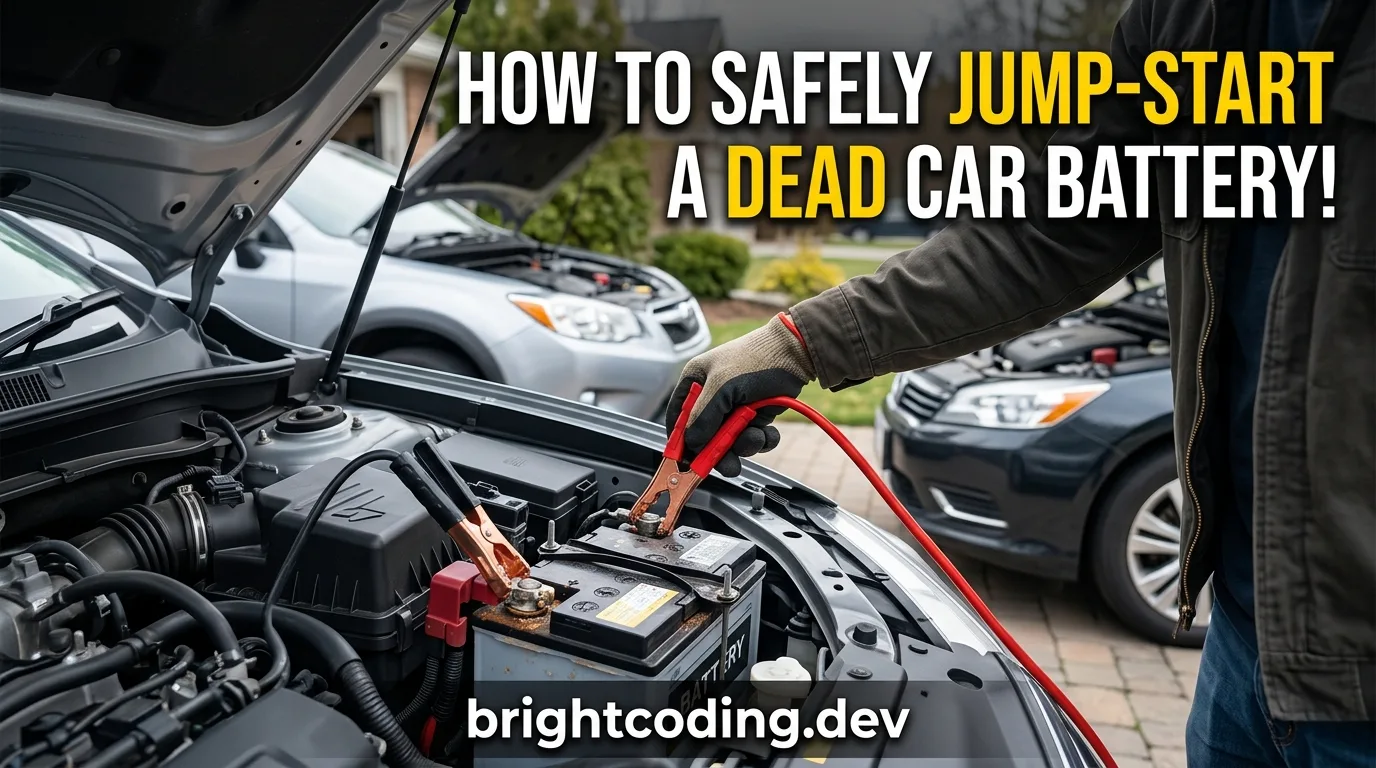
A dead battery almost never picks a convenient moment. You walk out, turn the key, and get that slow, sad click instead of an engine. Ten minutes from now you can be back on the road, or you can be standing there with melted jumper cables and a fried fuse. The difference is mostly in the order you do things.
This guide walks you through a safe jump start, step by step, plus the emergency tips that keep a simple dead battery from turning into a real repair bill. Read it once before you need it.
What you need before you start
- A running donor vehicle, or a portable lithium jump starter. Both work; a jump pack is safer and doesn't need a second car.
- Jumper cables, ideally 6-gauge or thicker. Thin, cheap cables get hot and struggle to pass enough current.
- Safety glasses. Batteries can spit acid if something goes wrong.
- Gloves, and a rag or paper towel.
- The owner's manual. Some cars have jump-start terminals in odd places, and some hybrids and EVs have specific procedures you should not guess at.
Step 1: Park the cars so they cannot touch
Pull the donor car close enough that the cables reach both batteries without stretching. Then turn both engines off, set the parking brake, and put both cars in Park or Neutral.
Why it matters: if the two cars touch, you can create a ground path that bypasses the cables and causes sparks in the wrong place. Keep a clear gap.
Tip: pop both hoods and locate the battery or the jump terminals before you connect anything. Finding them in the dark with cables in hand is how people connect the wrong posts.
Step 2: Inspect the battery before you touch it
Look at the battery case. If it is cracked, leaking, bulging, or hissing, stop. Do not jump it. A damaged battery can vent hydrogen and acid, and that is a job for a tow, not a set of cables.
Check the terminals too. White or blue crusty buildup blocks current. If the terminals are heavily corroded, a jump may not work until you clean them.
Safety warning: never lean over a battery while connecting cables. Stand to the side, keep your face back, and wear your glasses. Batteries can explode, and it happens more than people think.
Step 3: Connect the cables in the correct order
This is the part people get wrong. The order matters.
- Connect one end of the red cable to the positive (+) terminal of the dead battery.
- Connect the other end of the red cable to the positive (+) terminal of the good battery.
- Connect one end of the black cable to the negative (-) terminal of the good battery.
- Connect the other end of the black cable to an unpainted metal surface on the dead car's engine block or chassis, away from the battery. A bracket or bolt on the engine works well.
Why it matters: that last connection is the one that sparks. Doing it on bare metal away from the battery keeps sparks away from hydrogen gas. Never connect black to the negative post of the dead battery.
Tip: if you cannot find a good ground point, look for a clean metal bolt on the engine, not a painted panel or a plastic-covered part.
Step 4: Start the donor car, then the dead car
Start the donor vehicle and let it run for a minute or two. That gives the alternator a chance to push some charge into the dead battery. Then try to start the dead car.
If it starts, great. If it just clicks or cranks slowly, wait another two or three minutes with the donor running and try again.
Tip: if the dead car still will not start after a few attempts, stop. Cranking a weak battery over and over can damage the starter and drain what little charge is left. Something else may be wrong, and a quick check with an OBD code lookup can point you toward the cause before you keep guessing.
Step 5: Remove the cables in reverse order
Once the dead car is running, leave both cars running and disconnect in the opposite order you connected:
- Black cable from the metal ground on the formerly dead car.
- Black cable from the negative terminal of the donor battery.
- Red cable from the positive terminal of the donor battery.
- Red cable from the positive terminal of the formerly dead car.
Why it matters: removing in reverse keeps the sparking connection away from the battery until the circuit is already broken.
Tip: do not let the cable clamps touch each other or any metal while one end is still connected. That is a dead short.
Step 6: Drive it, do not just idle it
Do not shut the car off the moment it starts. Drive it for at least 20 to 30 minutes, ideally on the highway where the alternator spins faster. Idling in your driveway charges much more slowly.
Why it matters: the alternator needs time and engine speed to put back what the start drained. A short trip may leave you stranded again tomorrow.
Approximate cost note: if the battery is more than three to five years old and this keeps happening, the battery is probably due for replacement. A new standard battery typically runs somewhere in the $120 to $250 range installed, depending on your car and where you buy it. Verify the correct group size in your owner's manual.
Step 7: Figure out why it died
A one-time dead battery from leaving the lights on is no big deal. A battery that dies repeatedly is a symptom, not a problem.
Batteries fail for a few common reasons: age, a failing alternator, a parasitic drain that pulls power while the car sits, or loose or corroded connections. If the car cranks but runs rough or throws a warning light after a jump, run the codes and see what the computer has to say. Our step-by-step car guides walk through the diagnosis for most of these cases.
If you want to watch charging voltage in real time, the OBD live-data tool can show you what the alternator is actually doing while the engine runs. Healthy charging voltage is usually in the low to mid 14-volt range, but check your manual, since it varies by vehicle.
Pro tips
- Buy a lithium jump pack and keep it in the trunk. It costs less than one tow and works with no second car.
- Clean corroded terminals with a wire brush and a baking soda and water paste, then rinse and dry before reconnecting.
- Mark your cables with tape so you never mix up which clamp is which in the dark.
- If you jump the car and it dies again within a day, test the alternator before you buy a battery.
- In cold weather, a weak battery gives up fast. If yours is old and winter is coming, replace it on your schedule, not on the side of the road.
- Take a photo of the terminal layout with your phone before you connect anything. It saves arguments if you get interrupted.
Common pitfalls
Connecting black to the dead battery's negative post. This is the classic mistake. That last connection should go to bare metal, not the battery. Getting this wrong risks a spark near hydrogen gas.
Letting the clamps touch. If the red and black clamps touch while connected, you get a dead short and possible burns or damage. Keep them apart.
Jumping a frozen battery. A frozen battery can rupture when it receives a charge. If the battery case looks swollen in freezing weather, do not jump it.
Assuming the battery is the problem. A bad alternator, a loose belt, or a drain will kill a brand-new battery too. If you have swapped batteries and it still dies, stop throwing parts at it and diagnose the charging system.
Shutting the car off right after a jump. You will be back to a dead battery within a day. Drive it, then test it.
Useful resources
- Your owner's manual for jump-start terminal locations and battery specs.
- A multimeter, roughly $15 to $40, to check resting voltage and charging voltage.
- The AutoTools blog for maintenance walkthroughs and real-world repair stories.
- The symptom finder if you are not sure whether a problem points to the battery, the alternator, or a drain.
- The mechanical encyclopedia for plain-English explanations of how charging systems work.
FAQ
Can I jump-start a car with a completely dead battery? Usually yes, as long as the battery is not damaged, frozen, or internally shorted. A truly dead battery may need a few minutes of donor charge before it will crank.
Is it safe to jump-start a modern car with a lot of electronics? Generally yes if you follow the correct order and use the recommended jump terminals. Some hybrids and EVs have specific procedures, so check the manual first.
How long should I leave the cars connected? Let the donor run two to three minutes before trying to start the dead car, and keep both running until you have disconnected the cables.
Why does my car die again the next day after a jump? Either the battery is failing, or something is draining it. Test the battery and check charging voltage before replacing parts.
Can I jump-start a car in the rain? You can, but be extra careful with wet hands and wet metal. Keep the connections dry and never let the clamps touch.
Final word
A dead battery feels like a disaster until you have done this once. Now you know the order, the ground point, and the mistakes to avoid. Keep a jump pack in the trunk, learn where your terminals are, and the next dead battery becomes a ten-minute inconvenience instead of a bad day.
Ready to act on what you just read? Decode that warning light with the free OBD code lookup, run the matching car tools to check the numbers yourself, or browse more practical car articles for ideas.
Related articles

10 Signs Your Petrol or Diesel Engine Is Starting to Fail
Your engine rarely dies without warning. It whispers first, then talks, then screams. Most drivers only start listening at the screaming stage, which is when the repair bill has already tripled.
Read the article →
Petrol vs Diesel: Which Engine Is Cheaper to Maintain?
You are standing in a dealer lot or scrolling through listings, and the same question keeps surfacing: petrol or diesel? The sticker price is only half the story. What you actually pay over five or seven years depends on servicing, parts, fuel, and how the car is driven. That is where the petrol vs…
Read the article →
Petrol vs Diesel Engine: Which One Is Really Better in 2026?
Buying a car in 2026 means you cannot dodge the petrol versus diesel question, especially if you are shopping used or looking at a nearly-new car that still has a combustion engine under the hood. Read this and you will know how to match the engine to your actual driving, work out what the fuel and…
Read the article →
Carburetor vs. Fuel Injection: Which System Is Better?
You already know the short answer: fuel injection wins on paper. It has won in showrooms for decades, and there is no serious argument left about which system meters fuel more precisely. So why does the question still come up in the bay every week?
Read the article →
How to Parallel Park Like a Pro: Simple Tricks That Work
Parallel parking is the one driving skill most people never really learn. They pass the test, then spend the next twenty years circling the block for a spot they can just pull into. That ends today.
Read the article →
Gasoline Fuel Injection Systems Explained: The No-BS Guide to MPI, GDI, PFI, and Everything In Between
Confused by MPI, GDI, PFI, and dual injection? You’re not alone. no-BS guide breaks down every gasoline fuel injection system in plain English how they work, where they spray, and which one is best for your car. Learn real differences, common symptoms, and maintenance tips without textbook jargon.
Read the article →