10 Things You Should Keep in Your Car at All Times
Most of this costs less than a single tow. Put together a decent emergency kit and you will spend roughly $60 to $150 total, depending on what you already own and how much you want to prepare for. A bare-bones version can come in under $40.
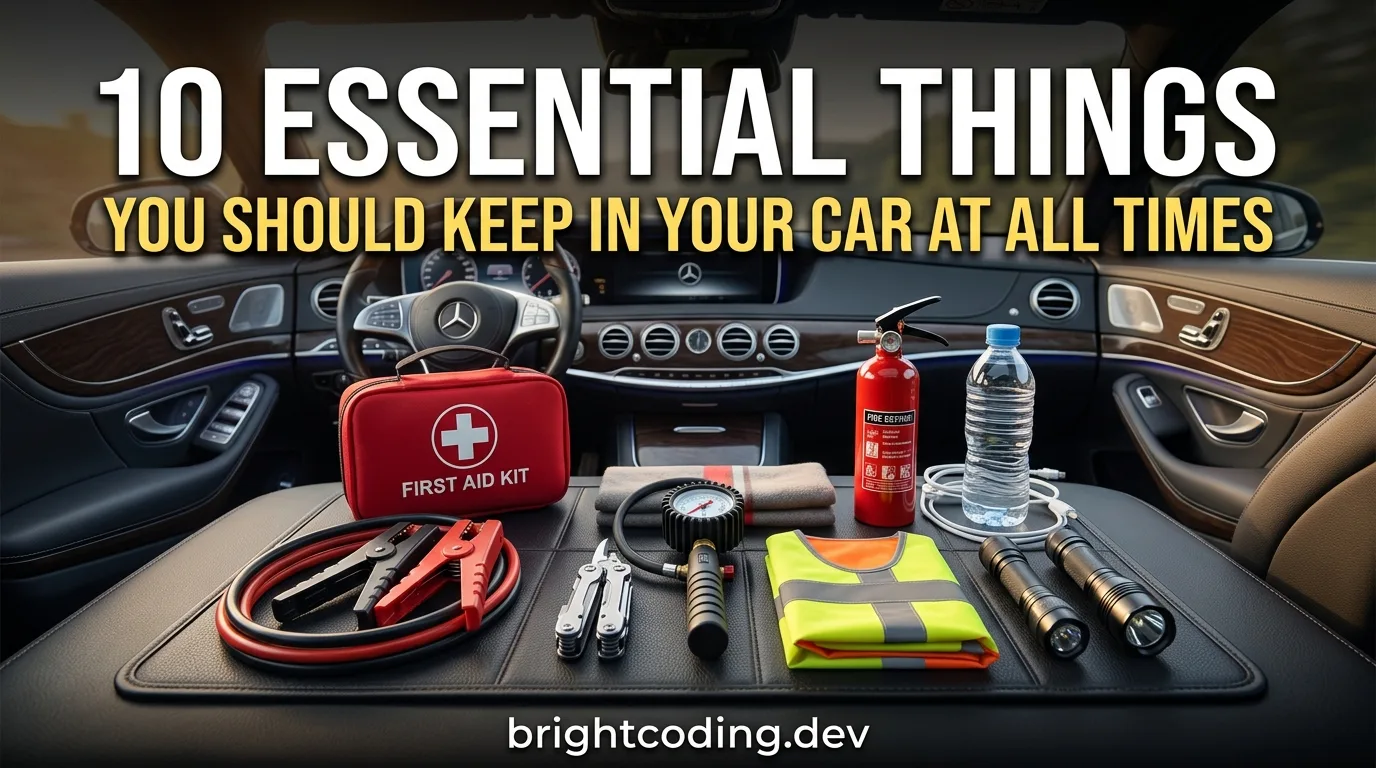
Most of this costs less than a single tow. Put together a decent emergency kit and you will spend roughly $60 to $150 total, depending on what you already own and how much you want to prepare for. A bare-bones version can come in under $40.
That range moves around a lot. A compact sedan has less trunk space than an SUV, cold climates need different gear than mild ones, and brand-name tools cost more than the cheap stuff. The point is not to buy the perfect kit today. It is to stop being the person on the shoulder at 11 p.m. With a dead phone and no flashlight.
Where the money goes
Most of the cost sits in a handful of categories, and knowing which one you are paying for helps you decide what to buy now and what to skip.
Safety and visibility gear is the cheapest and most important layer. A reflective vest, warning triangle or flares, and a good flashlight cover the basics. This is where I would spend first, because being seen prevents the worst outcomes.
Jump starting and tire gear is the next tier. Jumper cables are cheap. A lithium jump pack costs more but means you do not need a second car. A tire inflator and a plug kit can get you rolling without waiting for a truck.
Tools and fluids round it out. A basic socket set, pliers, screwdrivers, a quart of oil, and coolant top-off supplies handle small problems. These are the items people already own half of, so check your garage before buying.
Medical and comfort items are easy to forget. A small first aid kit, water, a blanket, and a phone charger are not glamorous, but a breakdown in bad weather is exactly when you want them.
Typical costs per option
The table below shows rough estimates for building a kit three ways. Treat every number as a ballpark and verify current prices where you shop.
| Item | DIY / already owned | Budget buy | Better-quality buy |
|---|---|---|---|
| Reflective vest + triangle | $0 to $10 | $10 to $20 | $20 to $40 |
| Flashlight or headlamp | $0 to $15 | $10 to $20 | $25 to $60 |
| Jumper cables | $0 to $15 | $12 to $20 | $25 to $45 |
| Lithium jump pack | $0 | $40 to $70 | $80 to $150 |
| Tire inflator | $0 to $20 | $20 to $35 | $40 to $80 |
| Tire plug kit | $0 | $8 to $15 | $15 to $30 |
| Basic tool set | $0 to $30 | $20 to $40 | $50 to $120 |
| First aid kit | $0 to $10 | $10 to $20 | $25 to $50 |
| Fluids (oil, coolant, washer) | $0 to $15 | $15 to $25 | $25 to $40 |
| Phone charger + power bank | $0 to $15 | $15 to $25 | $25 to $50 |
Add it up and a sensible middle kit lands somewhere in the $100 to $200 range if you are starting from nothing. If you already own a flashlight, pliers, and jumper cables, you might only need $40 more to feel covered.
The 10 things worth keeping in the car
Here is the list, roughly in order of how often you will actually reach for them.
- A bright flashlight or headlamp. A headlamp is better because it leaves both hands free while you work.
- Jumper cables or a lithium jump pack. A jump pack is safer to use alone and works without a second vehicle.
- A tire inflator and a plug kit. Slow leaks and punctures are the most common roadside problem.
- A basic tool set. Sockets, pliers, a couple of screwdrivers, and a adjustable wrench cover most small jobs.
- Reflective vest, triangle, or flares. Being visible is the whole game on a dark shoulder.
- A first aid kit. Small cuts and burns happen, and a proper kit beats a napkin.
- Fluids. A quart of oil, coolant, and washer fluid can get you to a shop instead of a tow.
- A phone charger and power bank. Your phone is your lifeline, and a dead battery ends the day.
- A blanket and water. Weather changes fast, and waiting is easier when you are warm and hydrated.
- A tire pressure gauge. Cheap, small, and the fastest way to catch a slow leak early.
If you want to go deeper on diagnosing weird noises or warning lights before you even open the hood, the car symptom finder is a good place to start matching what you hear to what it might mean.
Hidden costs people forget
Building the kit is not the only expense. These catch people off guard.
Tax and shipping. Online prices often exclude tax, and physical stores charge it at the register. Budget a bit more than the sticker.
Core charges. If you ever replace a battery or alternator, some shops charge a core fee you get back only when you return the old part. Skip the return and you eat the cost.
Tools you buy for one job. A specialty socket for a single repair can cost more than the repair itself. Sometimes borrowing or renting makes more sense.
Towing and roadside fees. A tow can run well over $100 depending on distance and time of day. A jump pack that costs $60 starts looking cheap fast.
Shop diagnostic fees. Many shops charge an hour of labor just to look at the car. That fee is sometimes credited toward the repair, sometimes not, so ask first.
Battery disposal and recycling. Some places charge a small fee to take an old battery. It is minor, but it adds up if you replace several.
How to spend less without cutting corners
You do not need the most expensive version of everything. You need the right things, in working order.
Buy the safety gear new. A used reflective vest or cracked triangle is not a bargain. Flashlights and jump packs are worth buying from a brand you trust rather than the cheapest listing.
Check what you already own. Most garages have a spare screwdriver set, a flashlight, and jumper cables. Pull them together before you shop.
Build the kit in two passes. Get the safety and jump-start items first, then add tools and fluids over the next month. Spreading it out keeps the hit small.
Keep batteries fresh. Check your flashlight and jump pack every few months. A dead jump pack is worse than none because you planned around it.
Learn one or two real skills. Knowing how to change a tire and jump a car safely saves you money and time. The step-by-step car guides walk through both without assuming you grew up in a garage.
Sample scenarios
A compact sedan with a slow tire leak. The owner notices the tire is low every few mornings. A $15 pressure gauge confirms it is losing air slowly. A $10 plug kit and a $25 inflator handle it in the driveway. Total outlay under $50, and the tools stay in the trunk for next time. If the leak turns out to be a valve stem or a bent wheel, that is a shop job, but the kit still saved a tow.
An older SUV with a weak battery. It cranks slowly on cold mornings. A $60 jump pack gets it started without a second car. The owner then uses a free OBD code lookup to see if any codes point to a charging issue. A new battery might run $120 to $200 installed, depending on the vehicle and where you buy it. The jump pack stays in the SUV for the next cold snap.
Both cases share a theme: a small upfront spend prevents a much bigger one later.
FAQ
How much should I expect to spend on a full kit? Most people land between $60 and $150 if they already own a few basics. Starting from nothing, $100 to $200 is realistic. Prices vary by region and brand, so check locally.
Can I build this myself? Yes. Almost everything on the list is a retail purchase, not a repair. The only skill involved is learning to use a jack, jump cables, and a tire plug kit safely. Practice once in your driveway, not on the shoulder.
Will a kit void my warranty? No. Keeping emergency items in your car has nothing to do with your warranty. What can affect a warranty is doing a repair incorrectly, so stick to what you are comfortable with.
Is it worth paying a shop to install any of this? Not really, since most of it is just storing items. The exception is a tire plug or a battery replacement if you are not comfortable doing it. For those, an independent shop is usually cheaper than a dealer.
Do I need a jump pack if I have cables? Cables work fine if someone else is around. A jump pack works alone, which matters more than people think. If you drive in remote areas or at odd hours, the pack is worth the extra cost.
The takeaway
You do not need a mechanic's worth of gear in your trunk. You need ten sensible items, most of which you can buy over a couple of weekends. Start with visibility and jump-starting, add tools and fluids as you go, and check your kit twice a year.
If you want to sharpen your own diagnostic skills so a warning light does not send you straight to a shop, the expert car tips and the mechanic quiz are both free and take a few minutes. A little knowledge in your head plus a small kit in your trunk beats a big bill on the side of the road.
Related articles

10 Signs Your Petrol or Diesel Engine Is Starting to Fail
Your engine rarely dies without warning. It whispers first, then talks, then screams. Most drivers only start listening at the screaming stage, which is when the repair bill has already tripled.
Read the article →
Petrol vs Diesel: Which Engine Is Cheaper to Maintain?
You are standing in a dealer lot or scrolling through listings, and the same question keeps surfacing: petrol or diesel? The sticker price is only half the story. What you actually pay over five or seven years depends on servicing, parts, fuel, and how the car is driven. That is where the petrol vs…
Read the article →
Petrol vs Diesel Engine: Which One Is Really Better in 2026?
Buying a car in 2026 means you cannot dodge the petrol versus diesel question, especially if you are shopping used or looking at a nearly-new car that still has a combustion engine under the hood. Read this and you will know how to match the engine to your actual driving, work out what the fuel and…
Read the article →
Carburetor vs. Fuel Injection: Which System Is Better?
You already know the short answer: fuel injection wins on paper. It has won in showrooms for decades, and there is no serious argument left about which system meters fuel more precisely. So why does the question still come up in the bay every week?
Read the article →
How to Parallel Park Like a Pro: Simple Tricks That Work
Parallel parking is the one driving skill most people never really learn. They pass the test, then spend the next twenty years circling the block for a spot they can just pull into. That ends today.
Read the article →
Gasoline Fuel Injection Systems Explained: The No-BS Guide to MPI, GDI, PFI, and Everything In Between
Confused by MPI, GDI, PFI, and dual injection? You’re not alone. no-BS guide breaks down every gasoline fuel injection system in plain English how they work, where they spray, and which one is best for your car. Learn real differences, common symptoms, and maintenance tips without textbook jargon.
Read the article →